
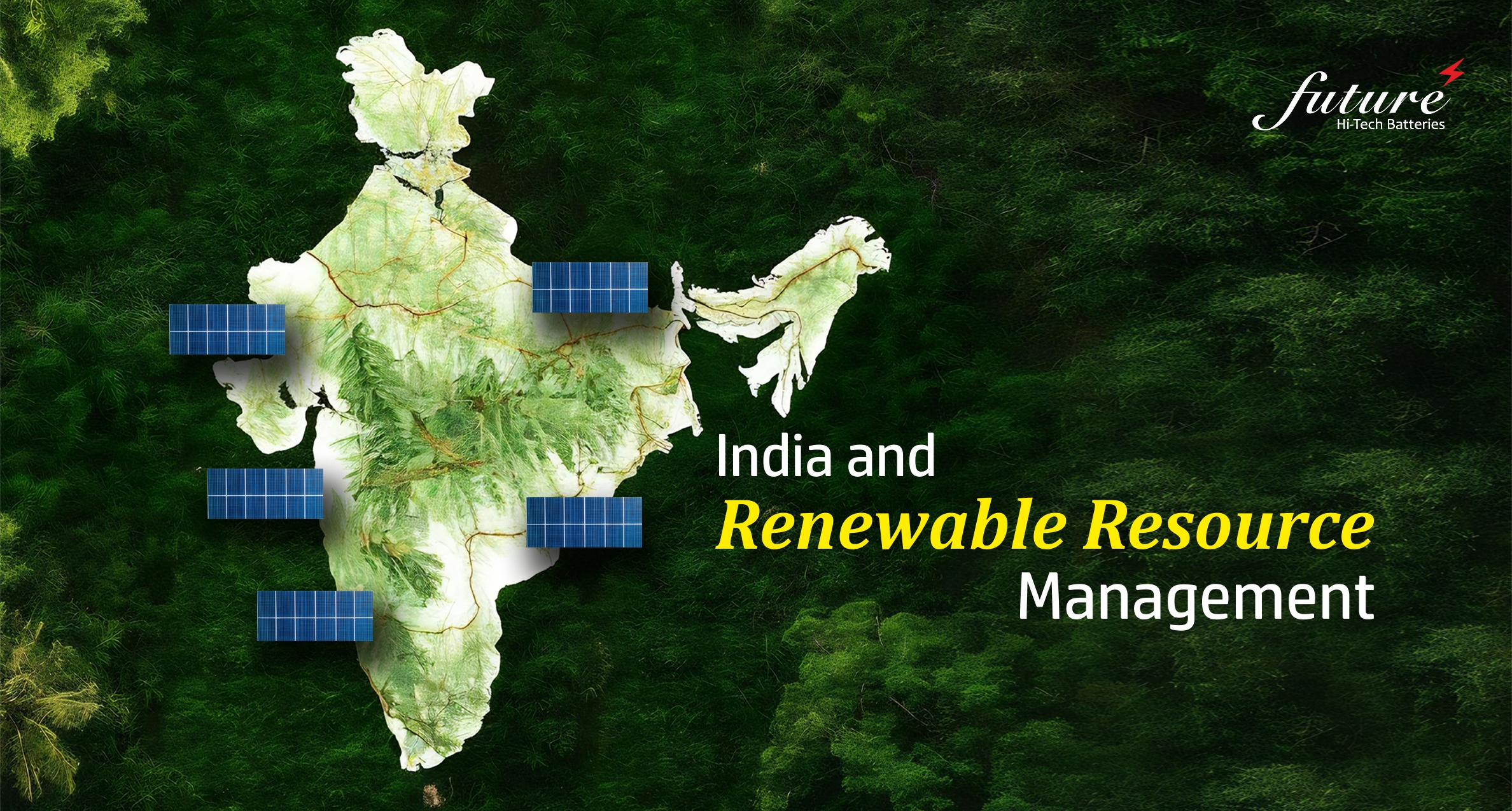
The management of the renewable resources
India is a country with a population of more than a billion with an energy demand that is booming at a very high rate (in this crisis time) and India is in a crucial point in its development. The future requires a colossal energy supply, and the world is at the same time calling out for a change in using carbon-intensive energy sources. This two-fold problem has made the management of renewable sources, i.e., solar power, wind power and hydro power, not only an environmental necessity of India, but a core component of the Indian economic and energy security policy. Resuming Bio gas, hydrogen and lithium ion energy has boosted our environment and will take us out from energy crisis. It is not only the global transition with which the country is involved; it is spearheading as one of the most massive and rapid clean energy revolutions globally.
The Aiming High and the Solar Surge
India is determined to have a cleaner future supported by effective government programs. India has made announcements at the global climate negotiations (COP26) of its Panchamrit goals, such as having a 500 Gigawatts (GW) of non-fossil energy capacity by 2030 and having half of its electricity demands met by renewable sources by the same year. Such a massive scale-up is mostly driven by the huge potential of solar energy.
Programs such as the PM-KUSUM Scheme are giving farmers the empowerment they need as they build solar pumps and small-scale power plant on their non-productive lands, which provides them with a two-fold advantage of irrigation and as a source of income.
The important thing is the decentralized method
It is not only huge power plants that are being brought into play, but instead every rooftop and every idle field can be turned into a power generator.
Wind and Hydro resources management
Portfolio Diversification- Solar tends to overshadow the renewable resource management, but the management of the resources is a multi-dimensional endeavor in India. India is already ranked among the top wind energy producers in the world especially along its extensive coastline and the states of Gujarat and Tamil Nadu. The next frontier that is under consideration to supplement onshore power is offshore wind power which uses the large and steady winds found at sea.
Moreover, hydroelectric energy produced by rivers and dams remains a considerable, reliable source of clean energy. Nevertheless, water based resources should be carefully balanced taking into account the environmental implication on the river ecosystems and the demand of water by the society in agriculture and drinking. It is a typical case of complexity of resource management, as the policy has to juggle with benefits of energy against the ecological and social issues. It will be proposed to use a mix of these diverse resources, solar, wind, and hydro to have a 24-hour, uninterrupted power supply that will completely replace reliance on the polluting fossil fuels. Some of the major issues in resource integration: In spite of such a great development, handling this fast change is challenging. The former is acquiring land. Solar and wind farms need very large areas of land which in most cases causes conflict on land use for farming and other uses. It is critical to provide sustainable location, which can be the use of barren land, wastelands, or even water bodies in floating solar.
Solar and wind energy is intermittent such that it only produces energy when there is sunshine or wind. To incorporate this variable power into an already existing and old age electricity grid, a complex technology such as smart grids and above all energy storage (large batteries) is needed. A lot of money must be invested on battery production and pumped storage hydropower to make the grid stable, reliable and able to manage the flow of clean energy without failure.
The third significant obstacle is the financial performance of the Distribution Companies (DISCOMs) that is in most cases poor. These companies are the bridge between power producers and consumers. Their challenges can postpone payments to developers of renewable energy, slow down the investment and further more the expansion of projects. It is therefore equally important to work towards reformation of the power distribution sector along with construction of new power plants.
The new industry of Green Hydrogen with renewable electricity has the potential to decarbonize difficult-to-abate industries such as steel and cement, and put the clean energy puzzle together. The path that India has taken in the management of renewable resources is a difficult one yet encouraging leading towards a roadmap to the globe that shows that green energy future is coming, one solar panel and one wind turbine at a time.
Looking Ahead: A self reliant sustainable India
The initiative of India towards renewable energy is a strong illustration of how a developing economy can effectively combine growth and sustainability. It is not only utilizing its immense natural resources I.e. sun, wind and water to satisfy its huge energy requirement, but also heading towards energy autonomy as well as achieving its climate pledges to the world, by strategic management of these resources. It is currently changing its attention to domestic production with programs such as the Production-Linked Incentive (PLI) to minimize dependence on imported solar parts and develop a strong and independent supply chain.
Ultimately, India’s transition towards renewable resource management is much more than an environmental necessity; rather it is a basic pillar of India’s journey towards Atmanirbhar Bharat. As our nation is leading towards clean energy, it is proving itself of becoming a developing superpower without compromising the planet.
Follow us on LinkedIn.


Your Comment Please