
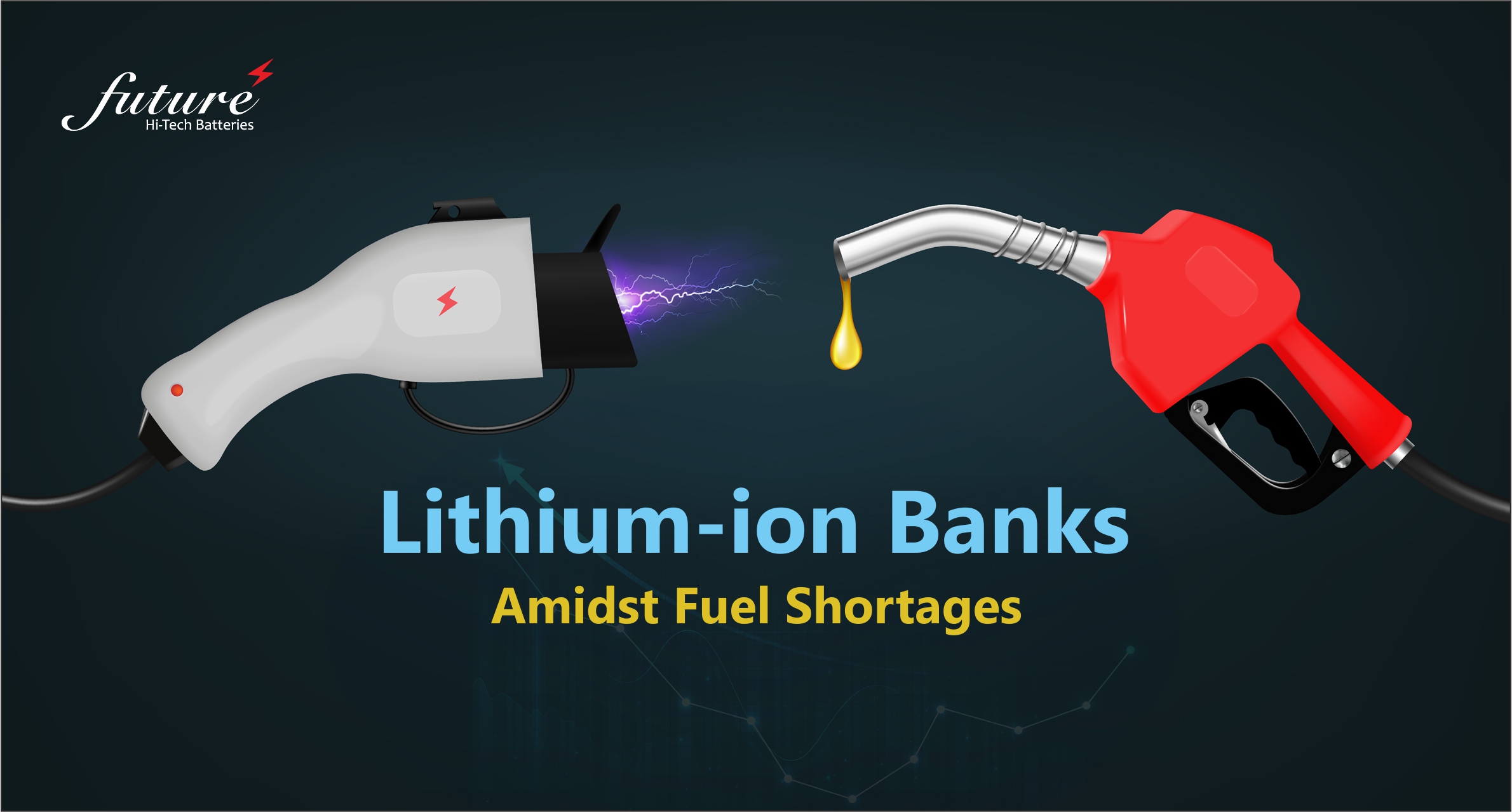
There is a specific kind of sinking feeling that comes with a flickering light bulb during a power grid failure. For decades, the “Plan B” for this anxiety was sitting in the garage: a bulky, loud, and smell-prone diesel or gasoline generator. But as global supply chains tighten and fuel prices dance a volatile tango, that old internal combustion backup is starting to look less like a lifesaver and more like a liability.
Major reasons for Lithium-Ion Abundance
• Maintenance Headaches: Gasoline degrades over time. If you haven’t used your generator in six months, there’s a good chance the carburetor is gummed up just when you need it most.
• Safety Risks: Storing large quantities of flammable fuel in a residential area is a recipe for disaster, not to mention the silent threat of carbon monoxide poisoning.
Here comes in picture “The Saviour” Lithium Ion Battery Packs. The edge to dominate….
Think of a Li-ion bank as a “bucket” for electricity. It can be filled from the grid when power is cheap and plentiful (or when the sun is shining on your rooftop panels) and emptied when the world outside goes dark. This creates a closed-loop system of independence. When the gas stations close their pumps, a lithium-backed home keeps the refrigerator running, the Wi-Fi humming, and the lights on without a single drop of petrol.
The Rise of the “Personal Utility”:
A Lithium-ion battery bank operates on a fundamentally different philosophy.Why Lithium? The Tech behind the Transition
* One might wonder why we aren’t talking about lead-acid batteries—the kind found in your car. While lead-acid was the old guard of battery storage, lithium-ion has lapped it several times over in terms of performance.
* The magic lies in the Energy Density. Lithium-ion batteries can store a massive amount of energy in a relatively small, lightweight footprint. This allows homeowners to mount a system on a wall rather than dedicating a whole shed to heavy, leaking lead plates.
* The Economic Shift: When you factor in the rising price of fuel, the cost of oil changes, spark plug replacements, and the inevitable engine repairs of a generator, the lithium bank starts to look like a bargain. Furthermore, many modern Li-ion systems offer “Peak Shaving” capabilities.
* Sustainability is the New Security: It’s impossible to talk about energy today without mentioning the climate. Fuel-based generators are notoriously “dirty,” emitting high levels of Carbon dioxide and particulate matter. Switching to a lithium bank—especially when paired with solar—turns your home into a mini-power plant that produces zero emissions at the point of use.
* This isn’t just about “being green.” It’s about Energy Security. In a future where carbon taxes may increase the cost of fossil fuels even further, being untethered from the pump is the ultimate form of future-proofing.
Living the “Lithium Life”: What to Expect?
Transitioning to a battery bank changes your relationship with energy. It’s quiet. There is no roar of an engine or the vibration that rattles the windows. Many modern systems come with sophisticated mobile apps. You can see, in real-time, exactly how much “juice” you have left and prioritize which appliances stay on.
Imagine a storm hits. The grid goes down. In a traditional setup, you’d have to go out in the rain, pull-start a generator, and run extension cords. With a lithium bank, the switch is often instantaneous (less than 10-20 milliseconds). Your clock doesn’t even blink.
The Challenges Ahead
Of course, no technology is perfect. The era of cheap, easy, and always-available fuel is flickering. Whether we like it or not, the transition to decentralized, stored energy is underway.
Investing in a Lithium-ion bank isn’t just about buying a gadget; it’s about buying peace of mind. It’s the realization that when the world gets loud and the supply lines get thin, your home can remain a silent, powered sanctuary.
The next time you see a “No Gas” sign at the local station, you won’t have to worry about your car or your phone. You’ll just look at the sleek box on your wall and realize that the future of power isn’t something you pump—it’s something you own.
Follow us on LinkedIn.


Your Comment Please