
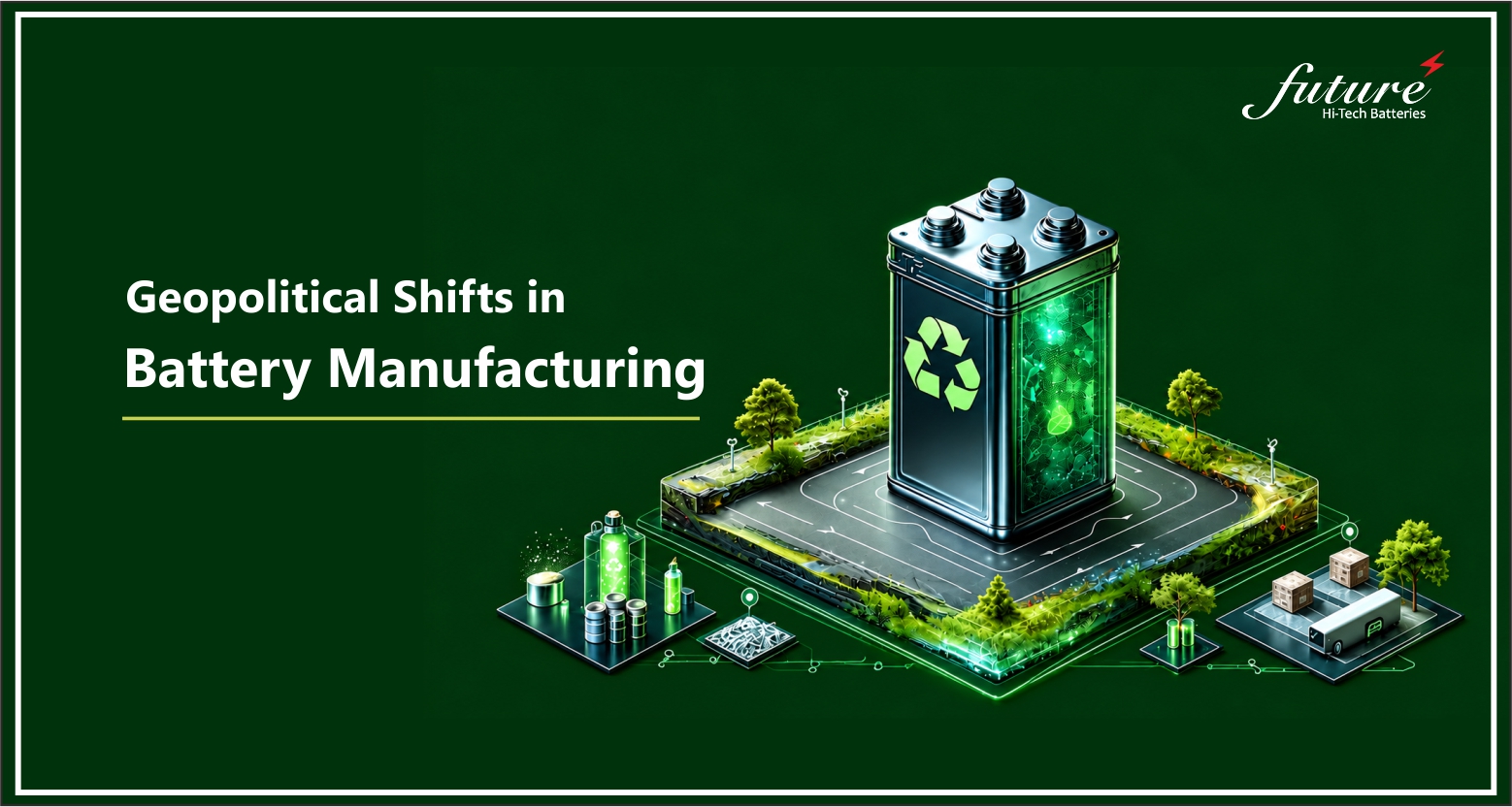
The global energy transition has ceased to be a shared environmental mission; it has officially entered its “National Security” era. As we navigate through 2026, the battery—once a humble component of our smartphones and early EVs—has been promoted to the most strategically sensitive piece of technology on the planet. This isn’t just about Lithium Ion Battery Manufacturing anymore. It’s about the survival of industrial sovereignty in an increasingly fragmented world. The “Great Decoupling” of the global battery supply chain is no longer a theoretical risk—it is our current reality.
The Death of Globalized Efficiency
For twenty years, the global economy operated on a simple, ruthless logic: build it where it’s cheapest. This strategic shift is not merely about energy; it is about the survival of industrial sovereignty in an increasingly fragmented world. The Death of Globalized Efficiency For three decades, the global industrial complex was governed by a single, uncompromising metric: cost-efficiency.
Nations have realized that relying on a single, geopolitical rival for the “fuel” of the 21st century is as dangerous as relying on a single source of oil was in the 1970s.
The American Fortress: The IRA and Beyond
In the United States, the Inflation Reduction Act (IRA) has matured from a legislative experiment into a massive industrial engine. In 2026, we are seeing the first wave of “clean” American batteries rolling off lines in the “Battery Belt”—a corridor stretching from Michigan down to Georgia.
But this independence comes at a literal price. Building a battery in the U.S. remains significantly more expensive than importing one from Asia. The American strategy is a gamble. By offering massive subsidies and erecting high trade barriers to Lithium Ion Battery Manufacturing,” they can create a domestic ecosystem that is insulated from global shocks. It is a pivot toward industrial isolationism fueled by a fear of being “obliterated. It is a term now common in D.C. circles when discussing the competitive threat of Chinese EV giants.
The European Paradox: Strategic Autonomy vs. Practical Reality
Europe is currently caught in a fascinating, though slightly desperate, balancing act. On one hand, the EU Green Deal Industrial Plan is pushing for “Strategic Autonomy”—the idea that Europe should mine, refine, and build its own energy future.
On the other hand, European energy costs are high, and the regulatory environment is dense. The paradox of 2026 is that to reach its climate goals, Europe is actually inviting Chinese manufacturers to set up shops on European soil. By doing so, Europe secures the jobs and the technology while technically “onshoring” the production to bypass its own Carbon Border Adjustment Mechanism (CBAM), which is fully operational this year.
While the EV market often prizes high energy density (NMC batteries), the data center and utility storage markets prioritize safety, longevity, and cost. This has led to the total dominance of Lithium Iron Phosphate (LFP) chemistry. LFP is safer, cheaper, and does not require cobalt—a mineral with a highly problematic supply chain. As China dominates the world’s LFP production, the AI boom has inadvertently deepened the world’s reliance on Chinese battery technology. The Rise of the Middle Powers and Resource Nationalis in the shadow of the U.S.-China rivalry, has lead to emergence of a new class of “Battery Middle Powers”.
India, through its Production Linked Incentive (PLI) schemes, is attempting to build an LFP-centric ecosystem that can compete with China on scale. These nations are using their resources as geopolitical leverage, playing the U.S., China, and Europe against one another to secure the best technology transfers and investment deals. They are the vital links in the new “Just-in-Case” supply chain, where diversity of source is more important than the absolute lowest price.
The Rise of the Lithium Ion Battery Manufacturing
While the energy giants clash, energy storage system has gained a massive market. AI workloads are power-hungry and require 100% uptime. To manage the strain on the grid and ensure their “green” credentials, tech giants are now among the world’s largest buyers of Lithium Iron Phosphate (LFP) batteries. As safety and longevity are more important than weight, LFP has become the dominant chemistry, further entrenching the supply chains that favor this specific technology. We have moved from a “win-win” era of global trade to a “zero-sum” era of national survival. Every factory built in Nevada is seen as a blow to Shanghai; every nickel mine secured by an Indian consortium is a loss for a European manufacturer.
For the average person, this means the price of an EV might stay higher for longer as we pay the “sovereignty tax.” But it also means a more resilient world.
Conclusion
Geopolitics has fundamentally redesigned the battery. It is no longer just a vessel for electrons; it is a vessel for national ambition. For the average consumer, this transition means higher prices—the “sovereignty tax”—and a potentially slower rollout of affordable electric mobility. If a conflict breaks out in one part of the globe, the rest of the world’s transport systems won’t simply grind to a halt. The “Iron Curtain” of the 21st century is made of lithium and graphite, and while it has ended the era of cheap, globalized efficiency, it has begun the era of secure, nationalized energy sovereignty.
Follow us on LinkedIn.



Your Comment Please